PETROCHEMICAL INDUSTRY

The world as we know it today would not be possible without the petrochemical industry´s contributions. It has improved our quality of life through its applications as the first link in important production chains.

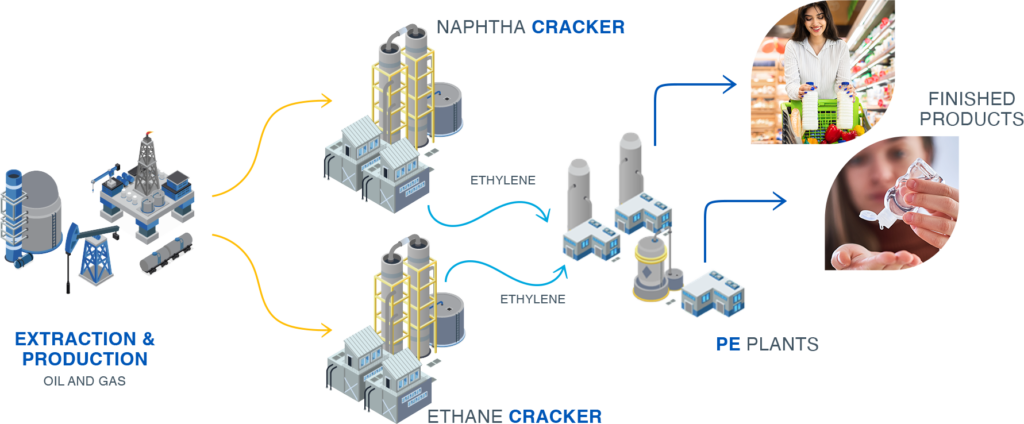
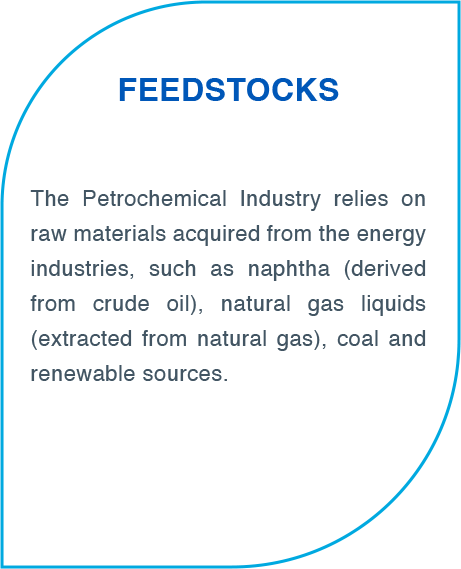
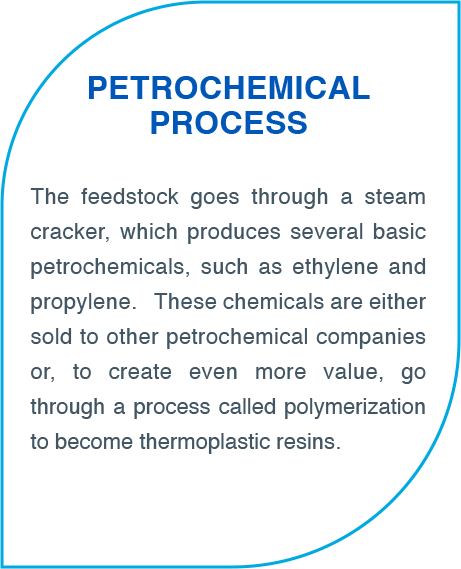
The petrochemical industry is responsible for chemically transforming many natural gas and other liquid hydrocarbons into raw materials for basic, intermediate, and final products through the following process:
POLYETHYLENE PETROCHEMICAL CHAIN

PLASTIC IN OUR DAILY LIFE

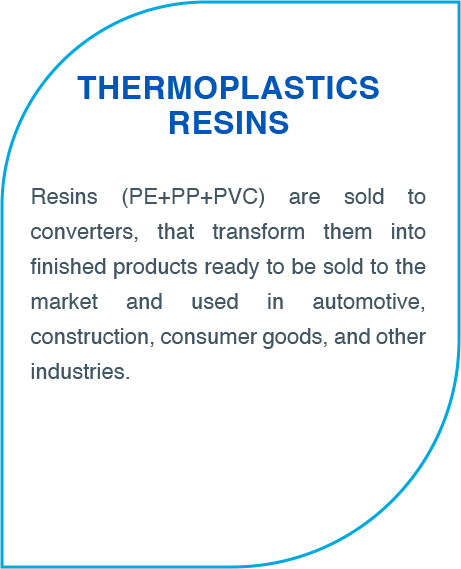
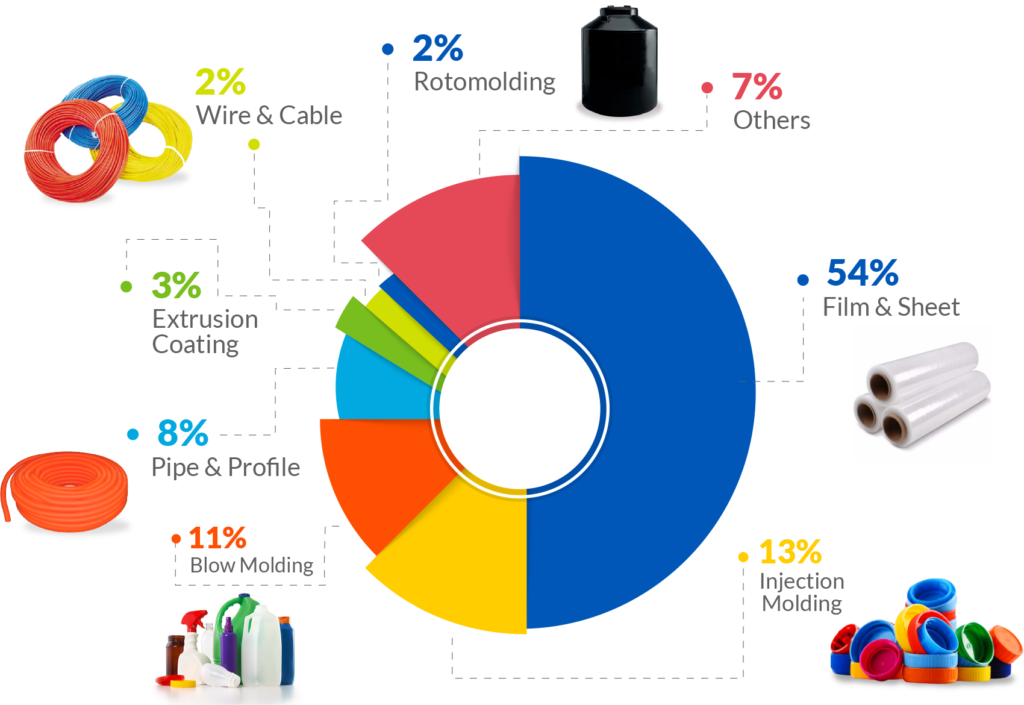
Chemicals and plastics are essential to modern life, and their applications are present everywhere. Companies are directly involved in this process by supplying high quality raw material to the plastics processing industry, which creates packaging, household, construction, heath care, and other products.

CYCLICAL TRENDS OF THE PETROCHEMICAL INDUSTRY

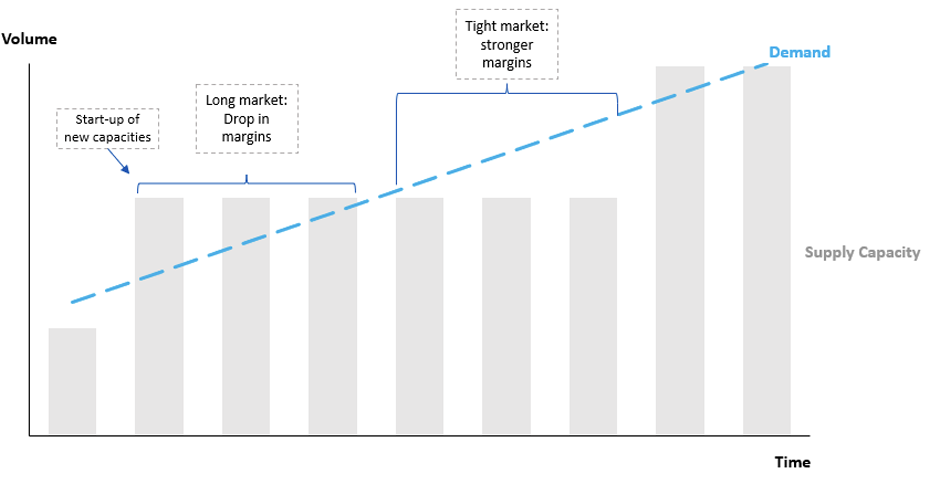
  • The petrochemical industry is cyclical by nature.

  • The demand for petrochemicals usually grows at a steady pace and supply catches up creating long and tight markets.

  • This is managed by producers adjusting their production rates.

  • When production rates are high or there is a deficit of production on the market, and margins are strong, this is known as a Tight Market or an Upcycle.

  • During a Tight Market, investment decisions are usually made simultaneously to build new petrochemical complexes.

  • However, when the new capabilities come into operation, there is an oversupply of products and low production rates.

  • The oversupply pushes prices down and causes a drop in margins. This is known as a Long Market or Downcycle.
Investments in the petrochemical industry do not occur in a linear fashion with demand, which results in significant excesses of capacity at certain moments. This is managed by reducing or increasing operating rates which is the amount of production out of the total capacity.

FEEDSTOCK PRICING

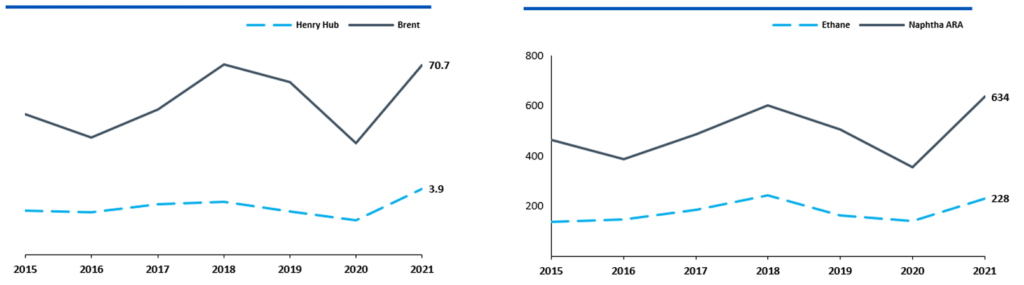
Feedstock pricing is given internationally and mainly impacted by changes in oil and natural gas prices
Natural Gas and oil
US$/MMBtu, US$/bbl
Feedstock Prices – Ethane and Naphtha
US$/t
Naphtha prices are highly correlated with crude oil prices, as the price of ethane follows natural gas fluctuations, yet sporadic detachments may occur, due to specific market conditions
  • Ethane-based producers are mainly established in the US and Middle East.

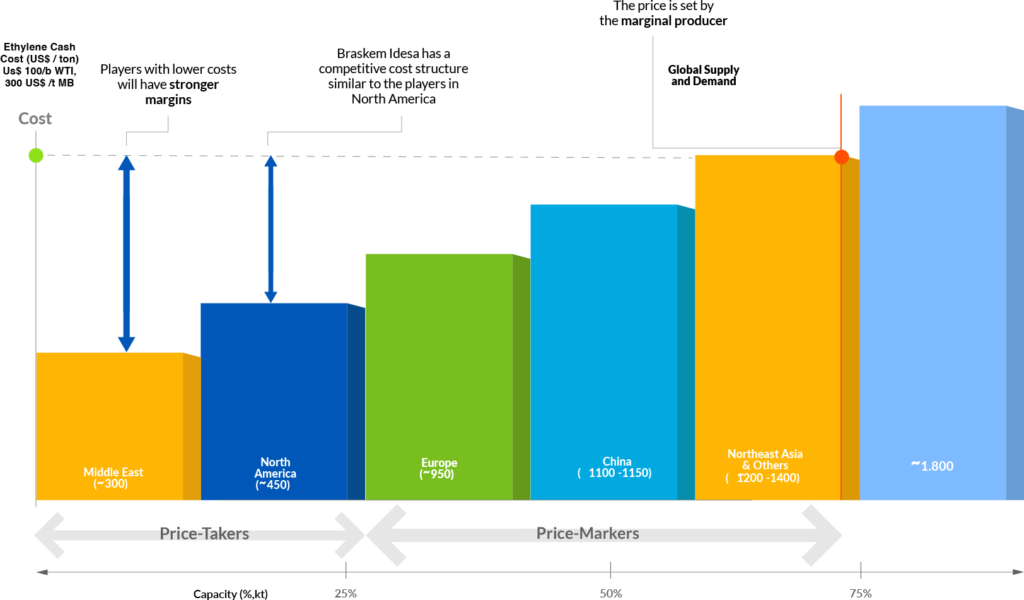
  • Naphtha-based producers are mainly in Asia and Europe and are considered marginal producers, having the highest cash cost.

  • Due to the differences in feedstock prices, ethane-based producers are considered the price takers of the market as they are the most competitive.
  • COMPETITIVENESS

    As ethylene is a considered a commodity, competition is driven by the cash costs, making the market price maker,
    who operates at the limit of its profit margin, is the marginal producer

    ETHYLENE – PE

    Polyethylene (PE) is a thermoplastic resin with applications across several sectors of the economy. It is used in the manufacturing of bags, films, and packaging for the construction industry, food, personal hygiene, and domestic uses, among others.