GLOBAL COMMITMENTS FOR 2030 AND 2050

In 2020, Braskem reassessed and renewed its long-term commitments to account for global challenges by 2030, in line with Agenda 2030 and the Paris Agreement. Developing these new challenges was an extensive and demanding process that took months, involving 27 workshops and interviews with over 500 company leaders and members. It also took into consideration the analysis of corporate risks in relation to our business and value chain, as detailed by the Corporate Risk Management area.

The new Global Sustainable Development Strategy was approved by the Board of Directors and addresses the seven relevant aspects of the business’ long-term commitments, which are related to Braskem’s materiality matrix. The long-term strategy’s priority is to address the following sustainable development goals:


BRASKEM IDESA’S COMMITMENTS

COMMITMENT TO REDUCE
OUR GHG EMISSIONS BY 2028

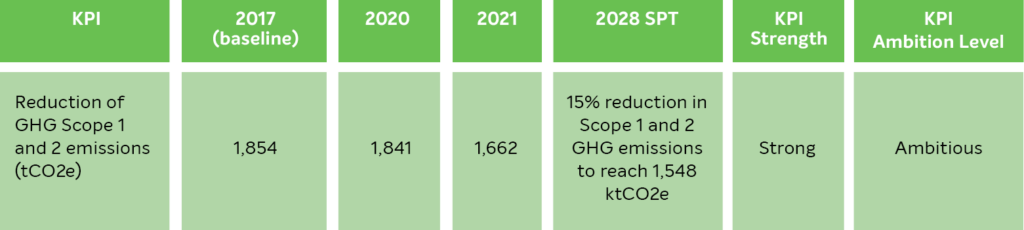
In 2021, we refinanced our Project Finance debt with the issuance of a Sustainability-Linked Bond (SLB) in the capital markets for US$1.2 billion, making it the largest private bond in LATAM linked to a sustainability commitment to date. The sustainable bond has a commitment to reduce scope 1 and 2 Greenhouse Gas (GHG) emissions by 15% by 2028, compared to the baseline year 2017, which had emissions of 1,854 ktCO2e. This goal was rated as strong and ambitious by Sustainalytics, an external consultant.

ENVIRONMENTAL COMMITMENTS
AND CIRCULAR ECONOMY

  • Uphold best practices from the Operation Clean Sweep Blue (Zero Pellet Loss) program, which protects the environment through the containment of pellets and dust in our industrial areas.
  • In 2025, we will expand Braskem and Braskem Idesa’s I’m Green™ global portfolio to reach 300,000 tons of products made with recycled materials.
  • Work to prevent 1.5 million tons of plastic waste globally from being incinerated, put in landfills, or dumped into the environment by 2030.
  • Reuse, recycle, or recover 100% of plastic packaging by 2040.
  • Achieve carbon neutrality by 2050.

SOCIAL COMMITMENTS

  • Uphold and reinforce our Social Management strategy, which directly and indirectly benefits communities in the Company’s area of social influence, in keeping with our social license to operate.

  • Continue to contribute to society through our Corporate Volunteering program, through which we seek to be agents of change through partnerships with associations and foundations in the country, and by collaborating to create a positive social impact on our communities.

ECONOMIC COMMITMENTS

  • The construction of the Puerto México Chemical Terminal in Coatzacoalcos, Veracruz, will be an economic boost to the region and strengthen the competitiveness of the country’s petrochemical industry.

  • Encourage Sustainable Economy investments as part of our ESG strategy, to maintain the Company’s financial health, comply with regulations, strengthen our corporate governance, and to back our commitment to total transparency with our stakeholders.

ECO INDICATORS

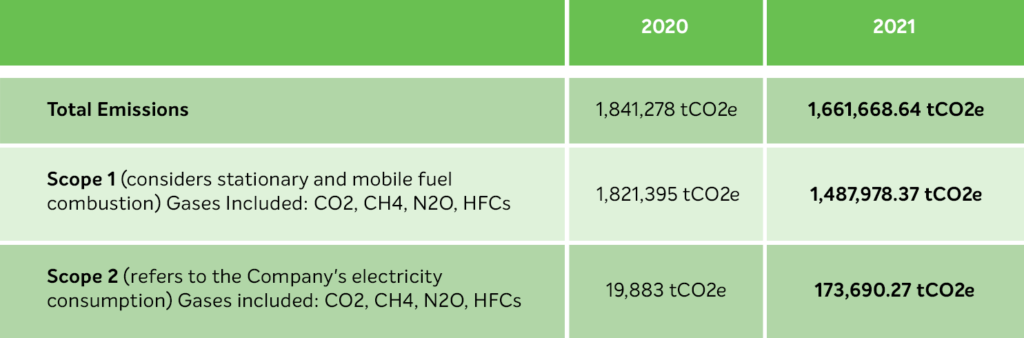
EMISSIONS GENERATED

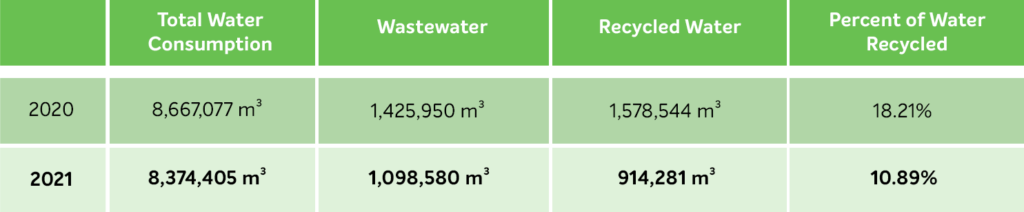
WATER USAGE

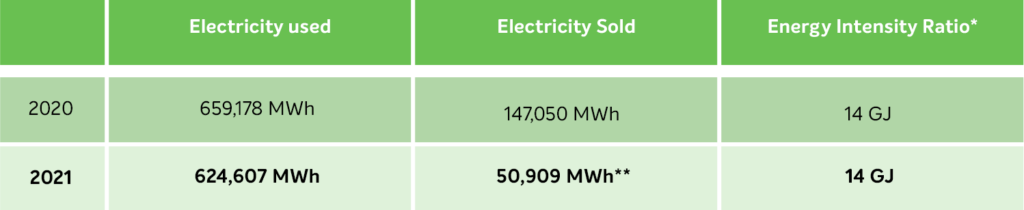
ENERGY EFFICIENCY